Ancient bacteria from permafrost reactivate after 40,000 years
Researchers from the University of Colorado have found that microorganisms frozen for millennia can regain activity when exposed to warmer temperatures.
 💡Tech
Photo: UNIAN
Key points
- Microbial reactivation
- Permafrost thawing
- Global warming impact
Scientists from the University of Colorado Boulder have conducted a study on permafrost samples collected in Alaska, some dating back 40,000 years. The experiment aimed to simulate the effects of rising temperatures on dormant microorganisms trapped in frozen soil.
Unexpected microbial growth
Upon exposure to temperatures ranging from 3 to 12 degrees Celsius, the bacteria began to proliferate. While the initial growth was slow, after six months, researchers observed the formation of significant biofilms—colonies of gray sludge visible to the naked eye.
- Sample age: up to 40,000 years.
- Location: Alaska, USA.
- Major concern: release of greenhouse gases.
The findings suggest that prolonged summer warming could provide enough time for these microorganisms to activate and begin decomposing organic matter on a large scale.
Source UNIAN — unian.ua/science/vcheni-rozbudili-bakteriji-shcho-spali-u-vichniy-m… ↗
Read next
 🏛️Politics
Russia tests NATO defense mechanisms through airspace incidents
Military experts point to systematic Russian attempts to test the Alliance's response speed to border violations.
 🎓Education
Ukrainian gardener grows a 350-kilogram giant pumpkin
A resident of the Cherkasy region, Oleksiy Buryachenko, has grown a massive 350-kilogram pumpkin and shared the harvest with the public.
 🇺🇦Ukraine
US Director of National Intelligence: Putin is not America's friend
US Director of National Intelligence Jay Clayton stated that Vladimir Putin cannot be considered a friend of the United States, particularly due to the ongoing aggression…
 🎓Education
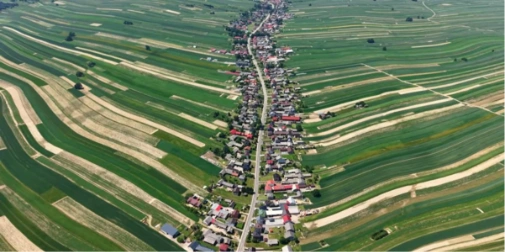
Poland's Unique 'Street Village': How a Medieval Planning Model Became a Global Phenomenon
The Polish village of Suloszowa amazes researchers and tourists with its unique structure, where all houses are lined up along a single nine-kilometer road.
 🛡️Security
Tragedy in Dymer: Death toll rises to eight following Russian attack
The number of fatalities in the Kyiv region has increased to eight as rescue teams continue to clear debris after the Russian strike.
 👥Society
Clashes break out at Kyiv Pechersk Lavra between opposing groups
Police reported a confrontation at the Kyiv Pechersk Lavra, triggered by disputes over the use of religious buildings.