Secrets of Lush Blooming: How to Properly Fertilize Indoor Begonias
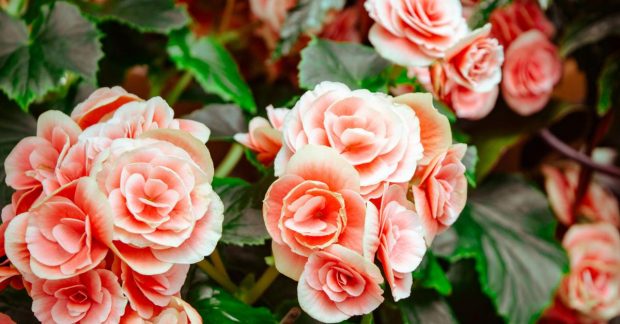
Experts shared key insights on caring for indoor begonias and the rules of applying fertilizers for abundant bud formation.
 👥Society
Photo: UNIAN
Key points
- Begonias require different fertilizers depending on their growth stage.
- Nitrogen should be excluded during blooming in favor of phosphorus and potassium.
- Apply fertilizers to pre-moistened soil every 10-14 days.
- Stop fertilizing entirely once the blooming period ends.
Caring for indoor plants during the winter and spring seasons requires careful attention to fertilization, as the limited soil volume in pots depletes quickly. Specifically, indoor begonias popular among urban residents need a well-balanced supply of nutrients to form lush and vibrant infesterations. Specialists note that there is no universal fertilization recipe, as the choice of nutrients directly depends on the growth stage and variety of the plant.
Stages of Feeding and Selection of Microelements
At the initial stage of vegetation, when the plant wakes up from its dormant period and begins to grow foliage, it is advisable to use complex mineral fertilizers with an equal ratio of nitrogen, phosphorus, and potassium. However, once the first buds appear, the approach changes: nitrogen application is completely halted, as it stimulates green mass growth at the expense of blooming.
During the active blooming phase, the focus shifts to phosphorus-potassium mixtures, such as superphosphate or potassium monophosphate. It is important to remember safety rules: fertilizers must always be applied to pre-moistened soil to prevent chemical burns to the root system. For indoor conditions, liquid fertilizer formulations are generally preferred for faster absorption.
Application Schedule and Organic Options
Regarding frequency, experts recommend fertilizing plants every 10 to 14 days until blooming ends. Experienced growers sometimes practice weekly feeding with a weak solution by diluting the fertilizer four times more than recommended by the manufacturer. Organic alternatives such as bone meal, seaweed extract, ash, or compost can also be used. Once blooming finishes, the plant enters a dormant state, and fertilization is paused until the next cycle.
Source UNIAN — unian.ua/lite/advice/chem-podkormit-begoniyu-dlya-cveteniya-polezno… ↗
Read next
 🧠AI Analysis
The smallest owl in Ukraine, the Eurasian pygmy owl, spotted in the Chornobyl Reserve
Researchers at the Chornobyl Reserve have recorded the smallest owl species in Ukraine — the Eurasian pygmy owl. This bird is notable for its daytime activity and habit o…
 🛡️Security
Technological Deadlock: Why Russia Cannot Restart Strategic Bomber Production
Expert Anatoliy Khrapchynskyi explains why Russian aviation relies on Soviet stocks and how sanctions and lost technologies prevent the production of new aircraft.
 🛡️Security
Ukrainian Forces Strike Russian Drone Base in Rylsk, Debunking 'Remote Mining' Claims
The 8th Air Assault Corps targeted a 'Rubikon S' drone workshop and ammunition depot located in a police station in central Rylsk.
 🛡️Security
Major fire breaks out at oil refinery in Novoshakhtinsk, Rostov region
A large-scale fire erupted in the Russian city of Novoshakhtinsk overnight following reports of explosions near fuel facilities.
 🛡️Security
Electricity supply restored in Sarny district following enemy attack
Power has been fully restored in the Rivne region after energy infrastructure was damaged during the November 20 attack.
 🎭Culture & Sport
Autumn Rose Care: Expert Advice on Preparing Flowers for Winter
Gardeners in Lutsk are preparing for the winter season, weighing the necessity of pruning roses. Experts advise not to rush to avoid harming the plants before the frost.